OpenHands is an open platform for cloud coding agents, designed to let engineering teams safely delegate real software work to AI at scale. As the project rapidly evolved from one of the fastest-growing open-source AI coding initiatives into a commercial, enterprise-ready platform, OpenHands faced a familiar challenge in a fast-moving market. The technology was powerful, but the story needed to clearly explain what made it fundamentally different from IDE assistants and closed, black-box agents. Maximize partnered with OpenHands to sharpen that narrative, define a new category around agentic software development, and build a brand and website foundation that could resonate equally with developers, enterprise buyers, and open-source contributors.
Challenge
As OpenHands gained momentum, the challenge was not adoption or technical capability. It was narrative clarity in an increasingly noisy market. AI coding tools were being positioned as everything from smarter autocomplete to fully autonomous developers, often wrapped in hype and closed systems. OpenHands needed to clearly define what it was and what it was not. The team had to communicate deep technical differentiation, asynchronous cloud execution, open-source transparency, and enterprise-grade control in a way that developers trusted and enterprise buyers could confidently adopt. Without a clear category and cohesive story, OpenHands risked being grouped with tools it fundamentally outgrew, limiting its ability to scale into regulated, security-conscious environments.
Solution
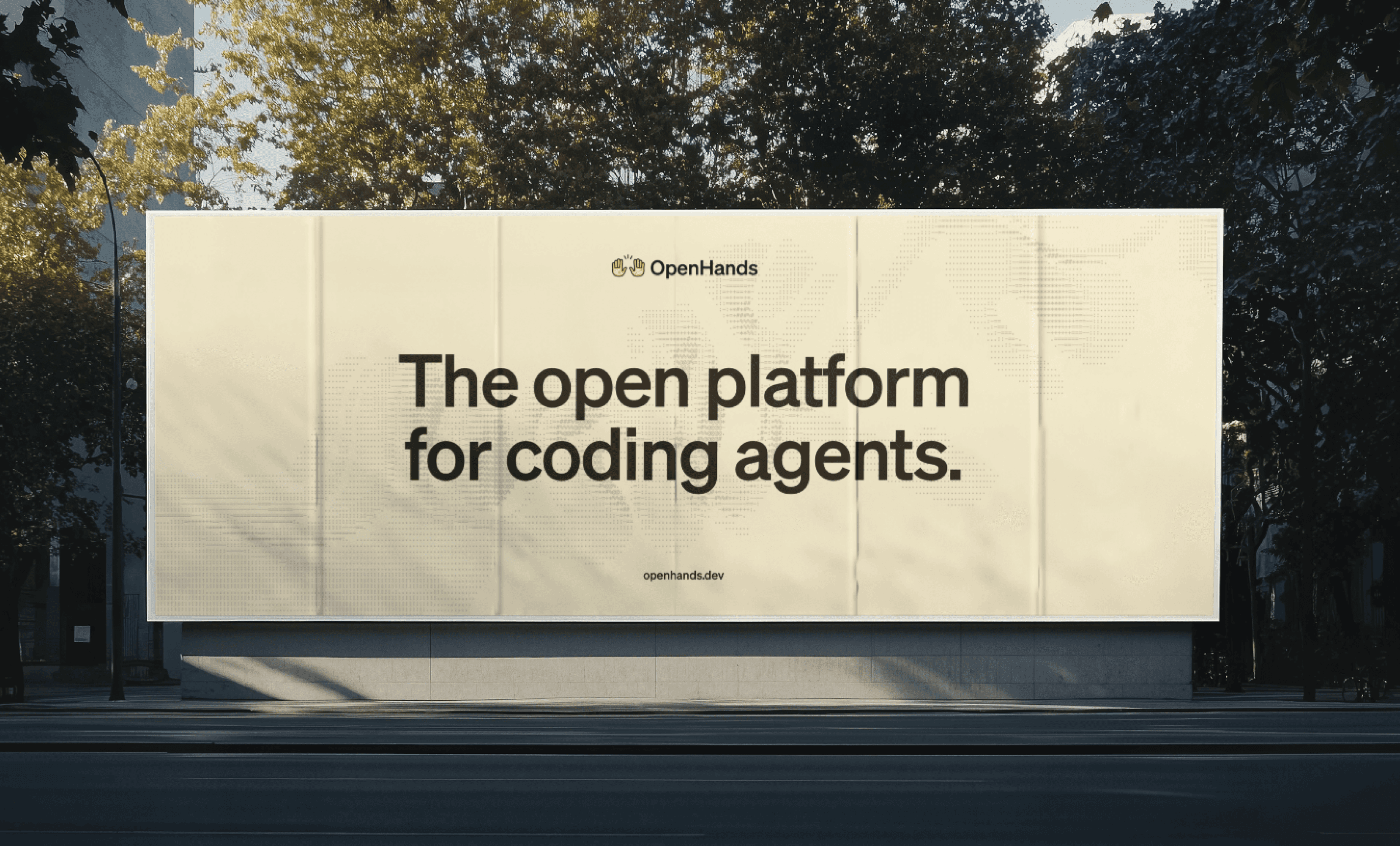
Maximize partnered closely with OpenHands and our design partner, PrettyClever, to turn a powerful technical vision into a clear, category-defining story. We helped reposition OpenHands as a platform for agentic software development, focused on safely delegating real engineering tasks at cloud scale rather than augmenting keystrokes in an IDE. This included defining a clear narrative around asynchronous execution, open and model-agnostic architecture, and enterprise-grade governance, while preserving the credibility and trust of the open-source community. That positioning was then applied across the website, messaging, and go-to-market foundation, ensuring that product, brand, and sales conversations all reinforced the same core truth: OpenHands enables reliable autonomy without sacrificing visibility, control, or trust.
Results
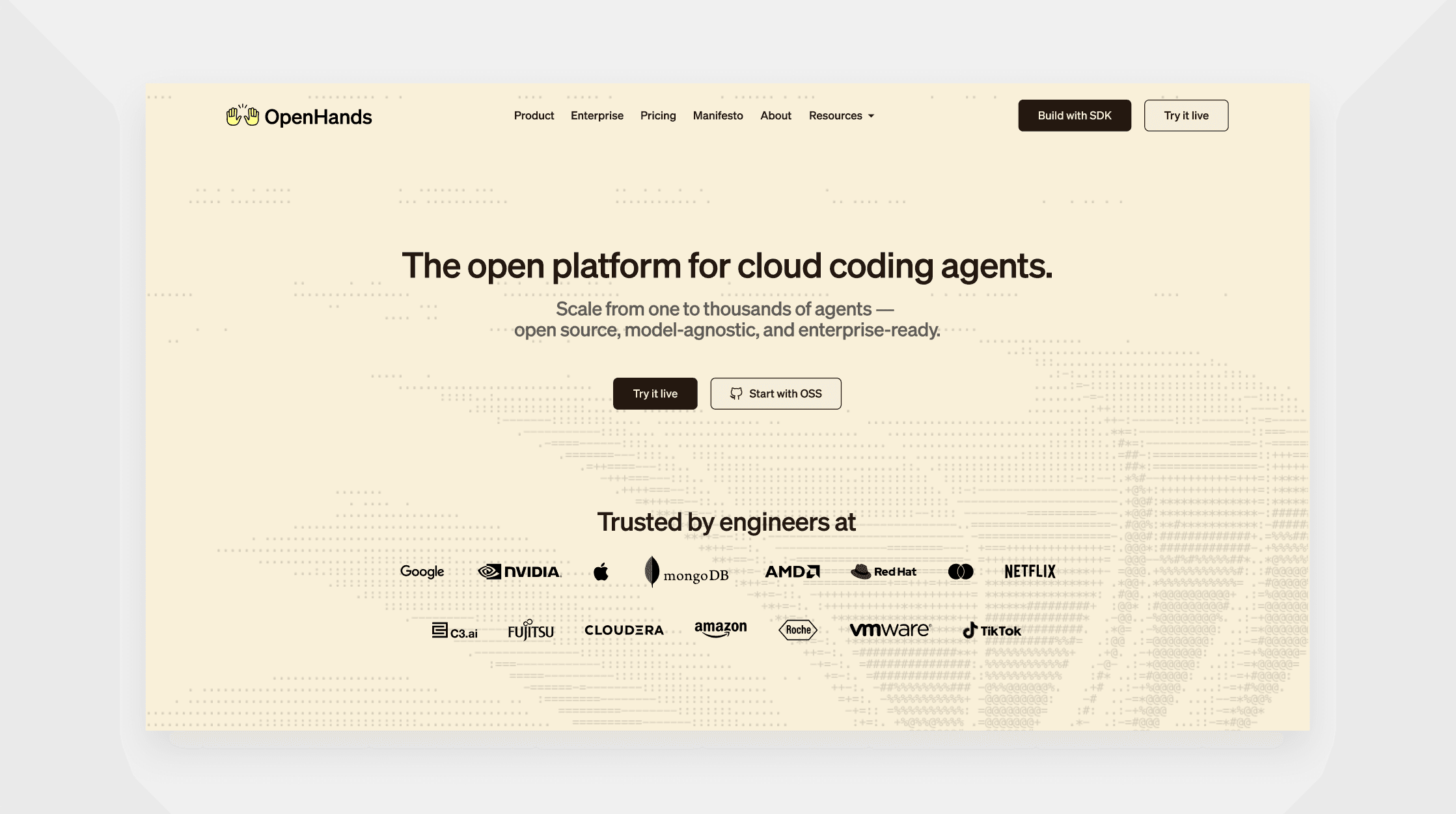
With a clear category and cohesive narrative in place, OpenHands emerged as a differentiated, enterprise-ready standard for agentic software development. The new positioning aligned developers, buyers, and contributors around a shared understanding of what OpenHands enables: safely delegating real engineering work at cloud scale with full transparency and control. The refreshed website and messaging clarified enterprise use cases, strengthened trust signals around governance and security, and created a foundation that could support regulated adoption without compromising open-source credibility. As a result, OpenHands moved decisively out of the “AI coding tool” bucket and into a category it could own.
The impact was immediate and measurable. OpenHands saw a 55% increase in weekly site traffic and a 2x lift in weekly organic search visitors following launch, alongside stronger engagement across PLG workflows and community channels. Internally, the new narrative brought alignment across product, engineering, and go-to-market teams, accelerating execution in a crowded market. As Joe Pelletier, Head of Product and Operations, put it:
“The Maximize team helped OpenHands move much faster in a crowded market and get far more out of our digital presence, from PLG workflows to our website and content, driving pipeline and community engagement.”